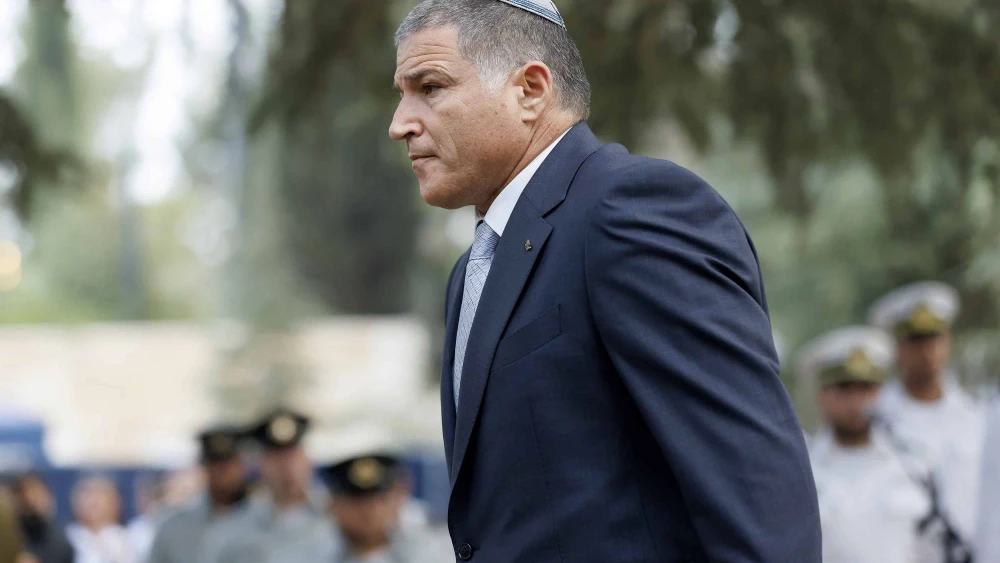

Israeli Ambassador Michael Lotem officially presented his credentials last week at the presidential palace in Hargeisa, the capital of Somaliland. President Abdirahman Mohamed Abdullahi, also known by his nickname Cirro, received the documents. This makes Lotem not only the first Israeli ambassador to Somaliland, but also the first ambassador from an internationally recognized state to be officially accredited there. As part of the ceremony, the foundation stone was also laid for the future Israeli embassy. The Israeli Foreign Ministry announced the event on Sunday.
Foreign Minister Gideon Sa’ar described the move as an important component of the new relationship. “Israel is determined to expand and strengthen its relations with Somaliland. The appointment of ambassadors is another important step in deepening our ties,” Sa’ar said. Lotem’s appointment had already been announced in April. The experienced diplomat had previously served as Israeli ambassador to Kenya, Azerbaijan, and Kazakhstan.
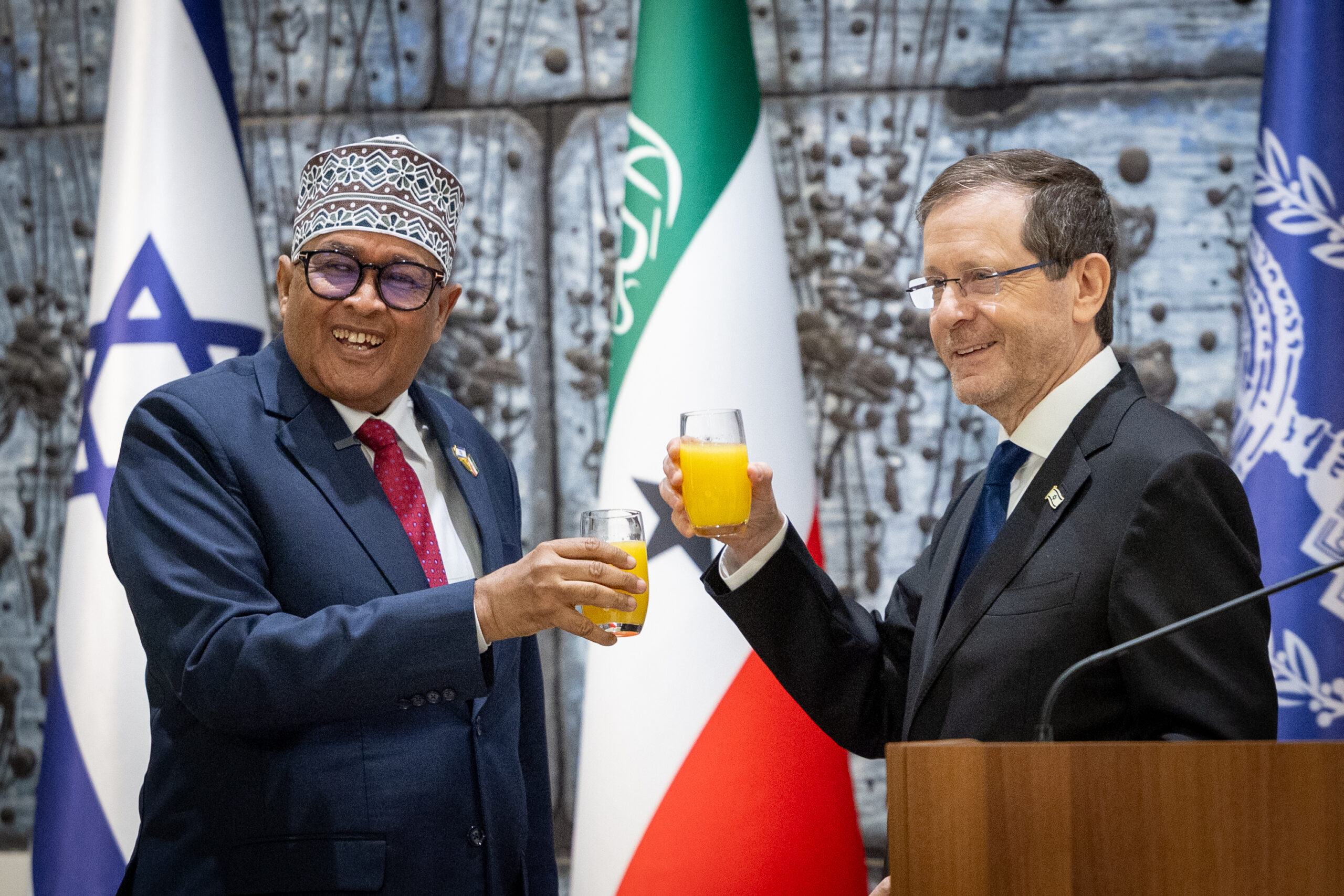
The exchange of ambassadors is the latest development in a diplomatic rapprochement that took a historic turn at the end of December 2025. At that time, Israel became the first UN member state to officially recognize Somaliland’s independence. In January, Sa’ar visited the territory, and in May, President Isaac Herzog received Somaliland’s first ambassador to Israel, Mohamed Hagi, in Jerusalem. In June, Somaliland opened its own embassy in Jerusalem during its president’s visit to Israel.
Somaliland: A state that has been waiting for recognition for 35 years
Somaliland is located on the Horn of Africa and encompasses the northwestern part of the territory internationally still regarded as Somalia. The territory was a British colony until 1960 and united with the former Italian colonial territory of Somalia just days after gaining independence. Following the collapse of the Somali state and a bloody civil war, Somaliland declared independence again in 1991.
Since then, the territory has had its own government, parliament, security forces, currency, and passports. It holds elections and manages its internal affairs largely independently. Nevertheless, for decades it was not officially recognized as an independent state by any UN member state. The government in Mogadishu continues to regard Somaliland as part of Somalia and rejects any secession.
For the leadership in Hargeisa, recognition by Israel is therefore far more than a diplomatic success. It breaks through decades of international isolation and opens up the possibility for Somaliland to place its relations with other states on a new footing. President Abdullahi described the presentation of credentials as a historic day. He also emphasized the strategic significance of cooperation given his country’s geographical location on the Red Sea and the Gulf of Aden.
Israel’s decision, however, met with considerable international resistance. Somalia condemned the recognition as a violation of its territorial integrity. The African Union, the Arab League, and the Organisation of Islamic Cooperation also criticized the move. More than 20 states joined the protests. The United States declared that it continues to recognize the territorial integrity of Somalia. This leaves Israel, for now, as the only UN member state to have officially recognized Somaliland as an independent state.
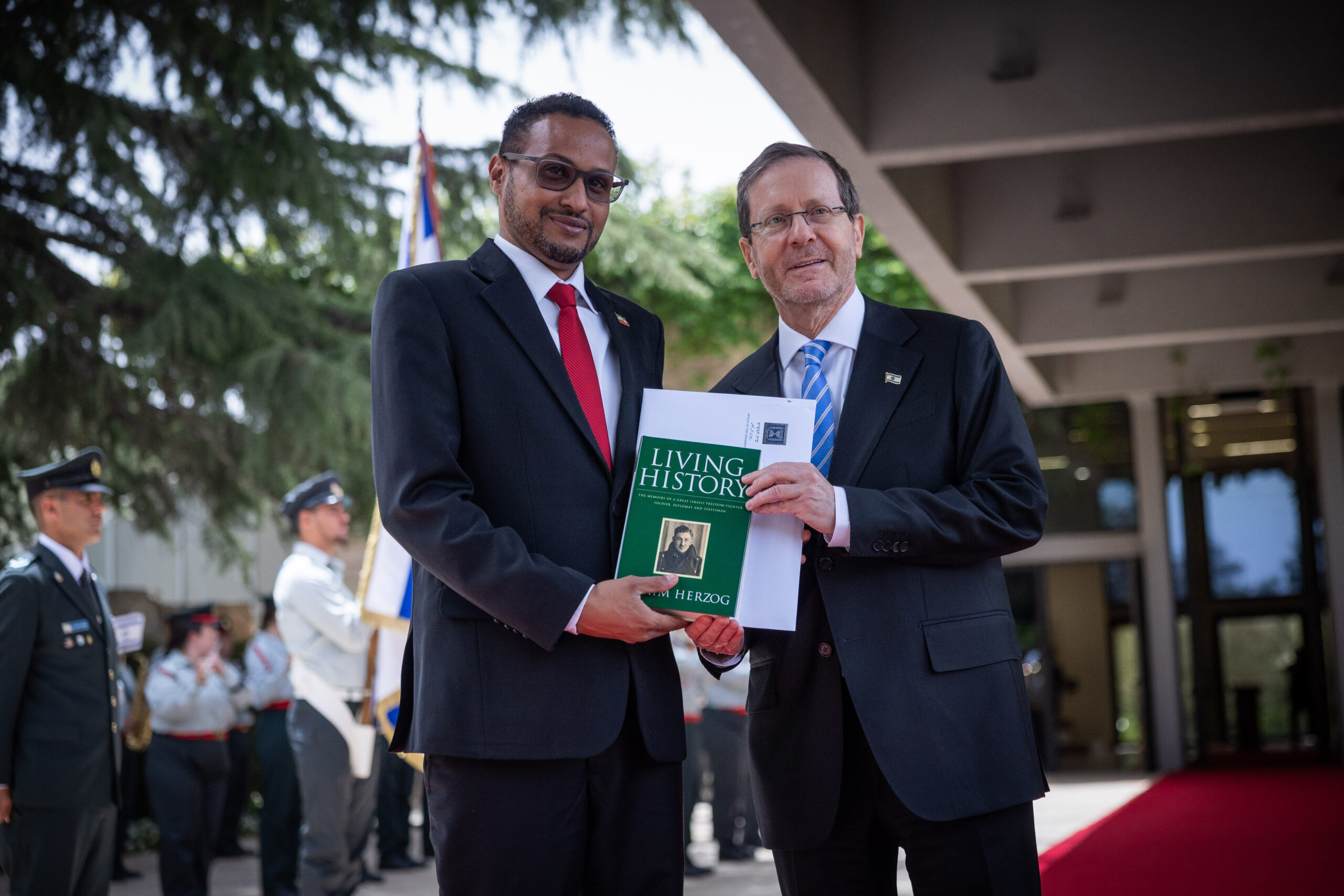
Israeli President Isaac Herzog with Somaliland’s first ambassador to Israel, Dr. Mohamed Hagi, during a ceremony at the presidential residence in Jerusalem on May 18, 2026. Photo: Yonatan Sindel/Flash90
The Red Sea as a shared strategic interest
Beyond the diplomatic symbolism, Somaliland’s geographical location plays an important role. The territory has a long coastline on the Gulf of Aden and lies opposite Yemen. In close proximity is the Bab al-Mandab strait, through which a significant portion of international shipping between the Indian Ocean and the Red Sea passes. This region has become particularly relevant for Israel since the Houthi movement in Yemen has repeatedly attacked commercial vessels and Israeli targets.
Middle East expert Ehud Yaari of the Washington Institute for Near East Policy therefore sees in the new partnership an opportunity to strengthen Israel’s position in the Red Sea. In addition to security contacts, he also cites possible cooperation in agriculture, water management, and information technology. Somaliland, in turn, hopes for Israeli support in economic development and in gaining further international recognition.
That the cooperation is intended to go beyond diplomatic contacts had already been made clear by Defense Minister Israel Katz during President Abdullahi’s visit to Israel in June. He spoke at the time of a security cooperation that had already existed for some time and of the desire to expand it. No specific details were made public.
Somalia’s President Hassan Sheikh Mohamud meanwhile leveled the accusation that Israel is primarily interested in gaining access to the Red Sea and is seeking a naval base in Somaliland. While the Somaliland leadership had signaled a general openness to military cooperation, President Abdullahi stated that there had been no discussions so far about establishing an Israeli military base.
With the official accreditation of Michael Lotem and the planned embassy building, the partnership now also gains a permanent diplomatic presence. For Somaliland, it is another step out of international isolation. Israel, at the same time, is expanding its relations with a territory whose location at the entrance to the Red Sea has grown increasingly significant for Israeli foreign and security policy.
Want more news from Israel?
Click Here to sign up for our FREE daily email updates