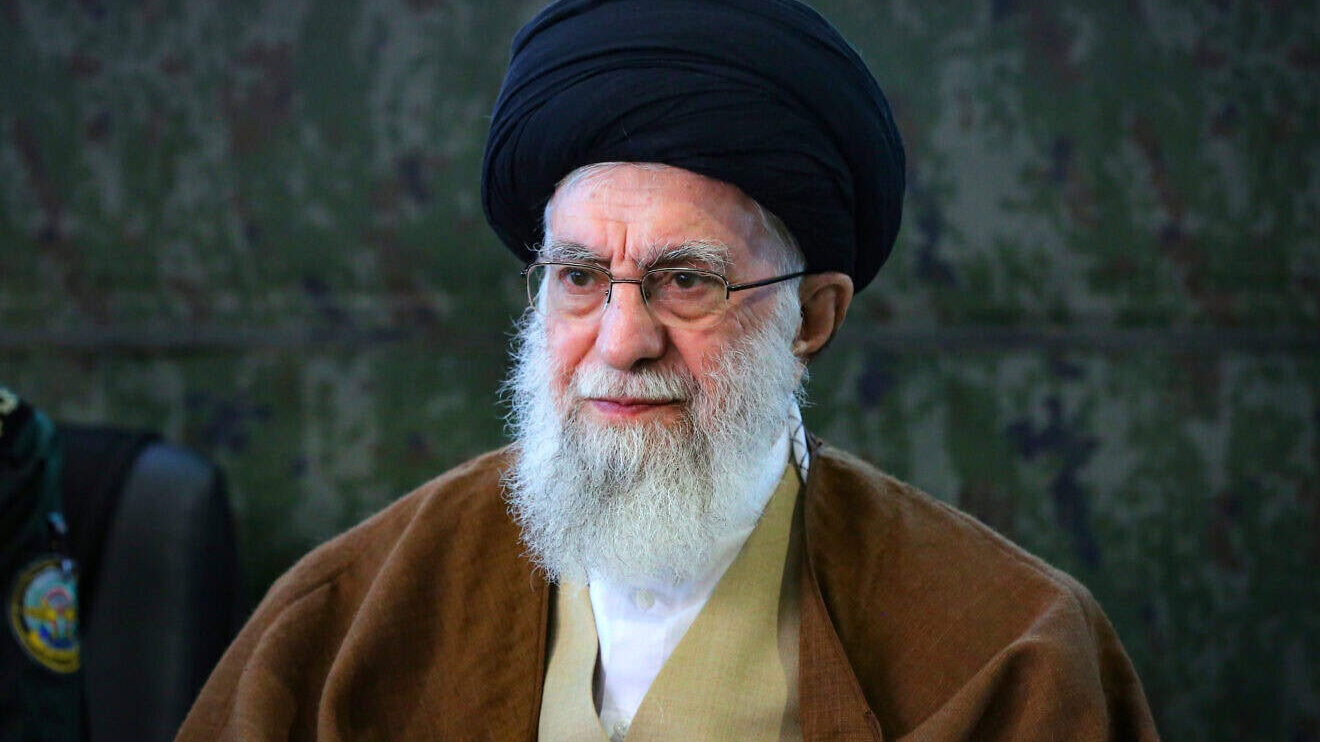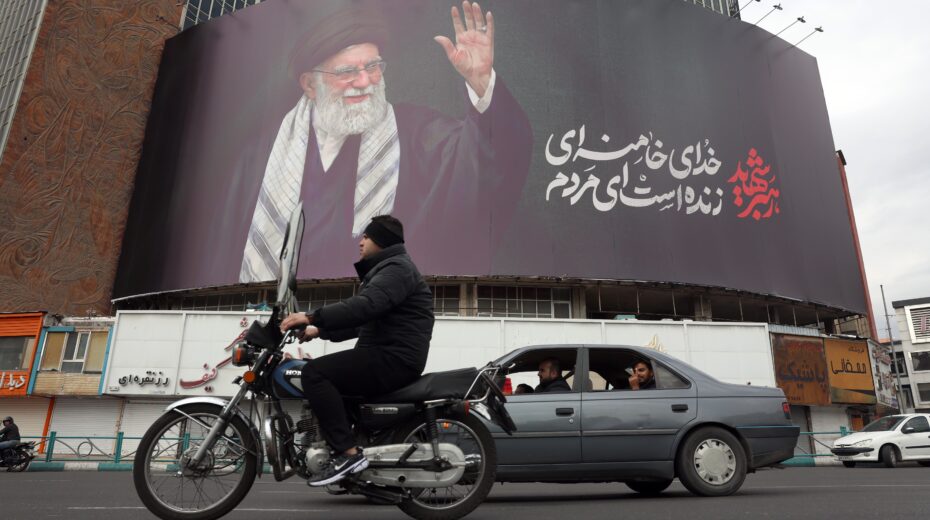
(Israel Hayom) The elimination of Ayatollah Ali Khamenei on Saturday, ending a nearly 37-year reign as Iran’s supreme leader, has thrown the country’s future into deep uncertainty. By the following morning, the outline of what promises to be a complex succession process had already begun to take shape, The Washington Post reported.
Iran’s constitution provided the initial blueprint. On Sunday, an interim Leadership Council was established to absorb the supreme leader’s responsibilities in the interim. Seated on that council are three figures: the incumbent president, the nation’s top judiciary official and a Guardian Council representative selected by the Expediency Council, the body that both counsels the supreme leader and arbitrates disputes between the government and parliament.
Those designated to “temporarily assume all the duties of leadership” are Iranian President Masoud Pezeshkian, hardline Chief Justice Gholamhossein Mohseni Ejei and Ayatollah Alireza Arafi.
In parallel with that interim arrangement, Iranian law requires the 88-member Assembly of Experts to “as soon as possible” select a permanent supreme leader, even as the council continues to govern.
Composed entirely of popularly elected Shi’ite clerics serving eight-year terms, the assembly’s membership requires approval by the Guardian Council, a constitutional watchdog with an established record of barring candidates across Iranian elections. In March 2024, the body excluded former president Hassan Rouhani, a supposed relative moderate who shepherded the 2015 nuclear accord with world powers, from seeking an assembly seat.
Because clerical succession deliberations unfold well beyond public scrutiny, identifying the leading contenders remains speculative at best, the report noted.
The most anticipated line of succession collapsed in May 2024, when President Ebrahim Raisi, Khamenei’s hardline protégé and presumed heir, was killed in a helicopter crash.
Attention initially turned to Mojtaba Khamenei, the supreme leader’s son, a 56-year-old cleric with no record of government service.
However, Mojtaba was reportedly eliminated in the first hours of the war. [Editor’s Note: Later reports indicate Mojtaba Khamenei is alive and the current frontrunner to succeed his father.]
The Islamic Republic has seen just one prior transition of supreme leaders. That precedent was set in 1989 with the death of Ayatollah Ruhollah Khomeini, the revolution’s founding symbol, who died at 89 after guiding Iran through the 1980-88 war with Iraq. Iran’s layered Shi’ite theocratic structure places the supreme leader at its center, vesting in that office the ultimate authority over every sphere of governance.
That power extends to supreme command of both the conventional military and the Revolutionary Guard, a paramilitary force designated a terrorist organization by the US in 2019 and substantially strengthened under Khamenei’s tenure.
Spearheading the self-described “Axis of Resistance,” a network of terrorist groups and regional partners arrayed across the Middle East against the US and Israel, the Guard also commands vast financial assets and extensive property holdings throughout Iran.
Originally published by Israel Hayom.