


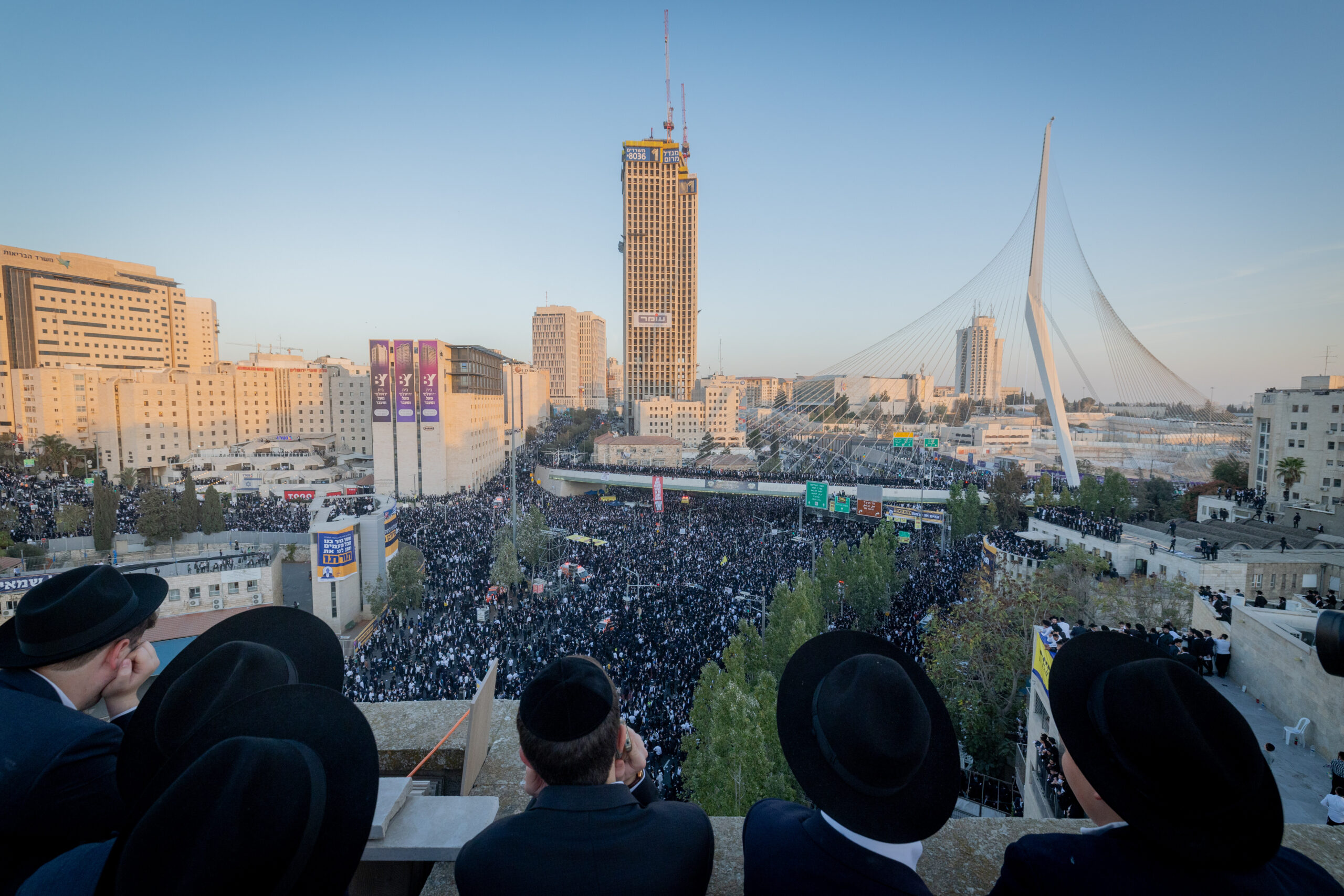
(JNS) The 25th Knesset dissolved on July 17, and while polls differ sharply over the balance between Israeli Prime Minister Benjamin Netanyahu’s bloc and its opponents, most surveys leave neither side with much room to spare. That once again places Israel’s smaller parties—particularly the Haredi parties—at the center of the coalition arithmetic that will determine who governs after the election set for Oct. 27.
Therein lies one of the enduring paradoxes of Israeli politics. Shas and United Torah Judaism (UTJ) hold only about 15% of the Knesset’s 120 seats. They do not compete for the premiership, have never sought to become Israel’s largest party and campaign primarily around the interests of the communities they represent. Yet their pivotal position in coalition negotiations gives them influence far beyond their electoral strength.
Their influence extends well beyond determining who becomes prime minister. Participation in successive governments has given the Haredi parties leverage over education funding, yeshivah budgets, welfare policy, national-religious institutions and the broader relationship between their communities and the state.
That observation raises the central question behind...
Become a Member
-
Read all member content
Get exclusive in-depth reports from Israel.
-
Get exclusive in-depth reports from Israel
Connect with Israel, right from your home.
-
Lift up the voice of truth and hope
Support Jerusalem-based Zionist journalism.

Already a member? Login here.











When religion becomes part of government, it should never seek more for itself than the rest of the nation gets. Seeking exclusion from the responsibility the rest of the young people have when it comes to defending the country, sets up division that the enemies of the country can use to exploit for themselves. Division is not from the Lord, the religious people should know that. Religious people who live better from the money they get from the government in many ways are living better than the people they are supposed to be ministering to. There is far more to ministering to people than studying, living alongside those being ministered to goes a lot farther than living above them. When those who are supposed to be ministering are not getting their hands dirty, they are not ministering.
There is a place for religion in government, it is to be an example of fairness and equality along with the responsibility to show the love of God to all His people.