(JNS) In today’s global discourse, few words have done more damage to Israel’s legitimacy than “occupation.” What is often presented as a neutral legal term has instead become a political weapon—one that reframes terrorism as resistance and casts Israel as a state whose very existence requires justification.
That warning comes from American Judge Alan Clemmons, a former Republican State Representative from South Carolina, who argues that modern antisemitism is sustained not only by hatred, but by language that is repeated until it becomes accepted as fact.
Speaking this week in Jerusalem, Clemmons said the term has moved far beyond legal terminology and now functions as a moral accusation.
“Once Israel is labeled an occupier, violence against its civilians can be rationalized as justified,” he said.
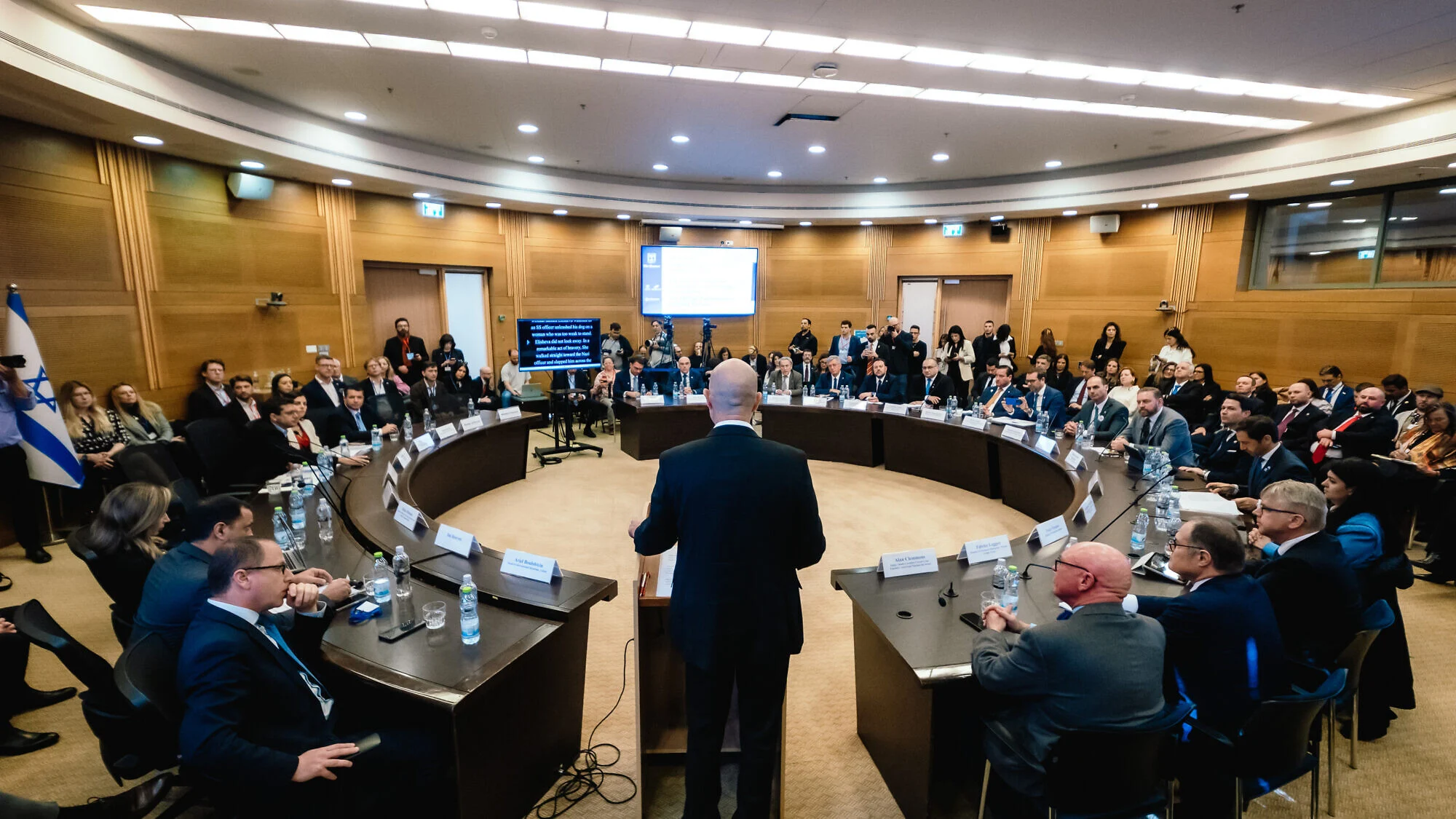
Clemmons delivered the closing remarks at an international parliamentary session on antisemitism at the Knesset on Monday, ahead of the 2026 International Conference on Combating Antisemitism in Jerusalem. But his message was not ceremonial; it was strategic. The modern battle against antisemitism, he said, is being fought in classrooms, courts and culture as much as on any military battlefield.
In an interview with JNS after the session, Clemmons said the legal case is clear, but Israel has failed to counter the narrative aggressively enough.
“It is clear that Israel has the simple title to the land of Israel and is not an occupier of Judea or Samaria under international law, yet Israel allows herself to be branded as such,” he said. “This lays the foundation for calling Israel a thief. The government must do a better job of pushing back in such messaging and engage heavily in education through social media.”
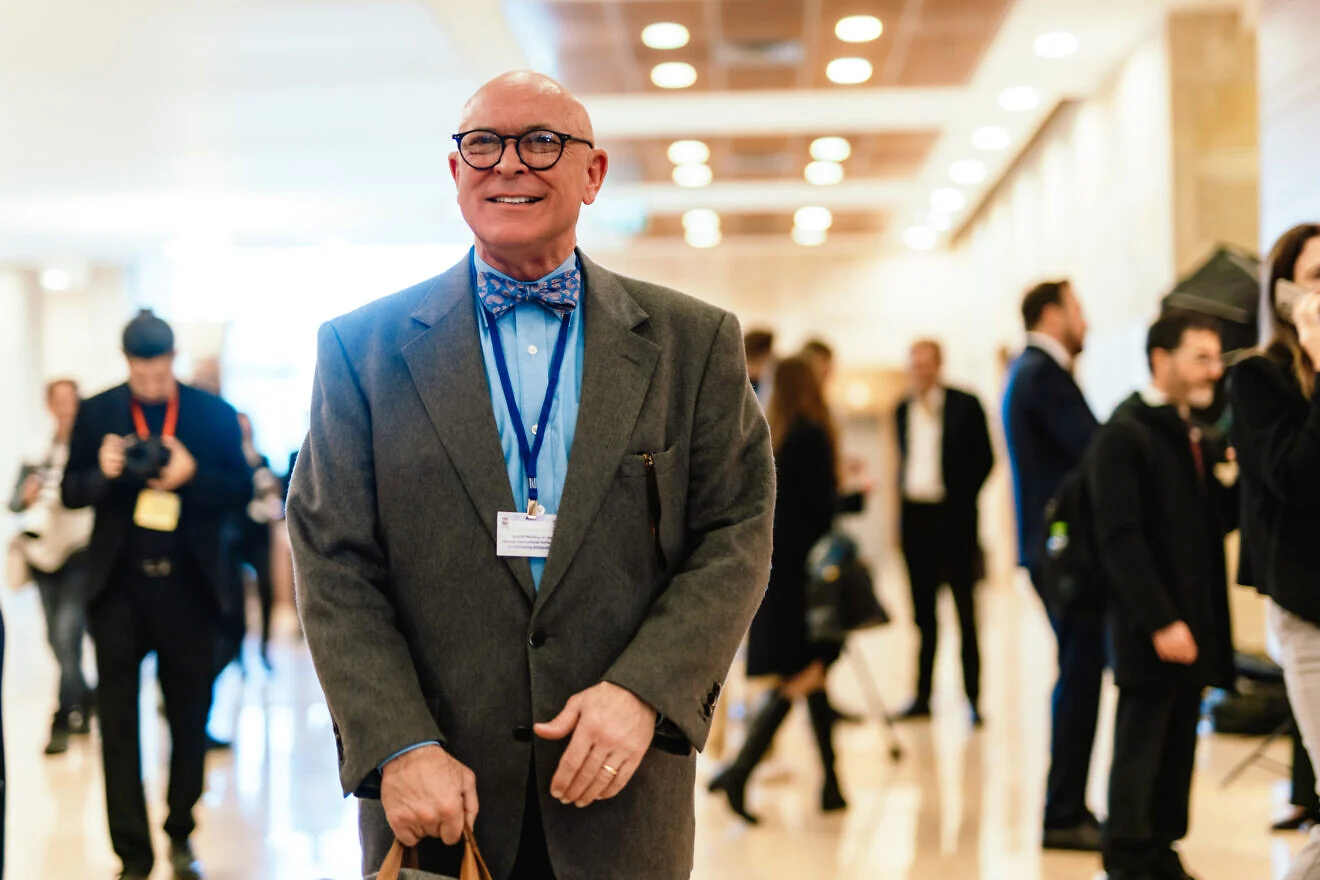
Judge Alan Clemmons in the Knesset, Jan. 26, 2026. Credit: Eclipse Media.
A South Carolina Circuit Court judge and founder of American Patriots for Israel, Clemmons has spent decades pushing back against narratives he believes distort Israel’s legitimacy.
Before taking to the bench, he authored South Carolina’s 2011 Stand with Israel Resolution, which affirmed that Israel is not an occupier of its ancestral homeland. The resolution helped pave the way for early state-level anti-BDS legislation and broader adoption of international antisemitism definitions across the United States.
Clemmons is a member of the Church of Jesus Christ of Latter-day Saints and previously served as a missionary, while working closely with Jewish and pro-Israel organizations throughout his career. He has visited Israel more than 20 times. Those visits, he said, convinced him that the central battlefield today is not military, but educational and legal.
“The war today is educational and legal,” he said. “If you lose there, everything else follows.”
That theme resonated throughout the parliamentary session, hosted by Diaspora Affairs Minister Amichai Chikli and Knesset Speaker Amir Ohana, which brought together lawmakers from Europe, North America and South America to discuss how antisemitism spreads in modern society.
‘This is indoctrination’
One of the most striking moments in the parliamentary session came when Romanian Member of the European Parliament Cristian Terheș presented an Arabic-language textbook partially funded by European programs.
Rather than offering political rhetoric, he presented translated passages praising terrorist Dalal Mughrabi, who led the 1978 Coastal Road massacre that killed 38 Israelis, including 13 children.
“This is not incidental,” Terheș said. “It is indoctrination.”
Call for clarity
For Clemmons, the connection between classroom messaging and the misuse of the word “occupation” is direct.
“When children are taught that murderers are heroes, and the world is taught that Israel is an illegitimate occupier, antisemitism becomes morally acceptable,” he said. “At that point, violence no longer looks like hate. It looks like justice.”
Clemmons argues that combating antisemitism requires more than condemnation. It requires clarity—particularly from Israel and its allies.
“Israel must reject the ‘occupation’ label outright,” he said. “Not hedge around it, not accommodate it. And we must push back at scale—on social media, in international forums and wherever young people are forming their views.”
He warned that younger generations often encounter the Israeli-Palestinian conflict through slogans rather than historical context, leaving them vulnerable to narratives that frame antisemitism as human-rights advocacy.
“If we don’t contest those ideas early and aggressively, they harden,” he said. “And once they harden, they are very difficult to undo.”
He closed his remarks with a simple phrase in Hebrew: “Am Yisrael chai! (The nation of Israel lives!).”
Want more news from Israel?
Click Here to sign up for our FREE daily email updates