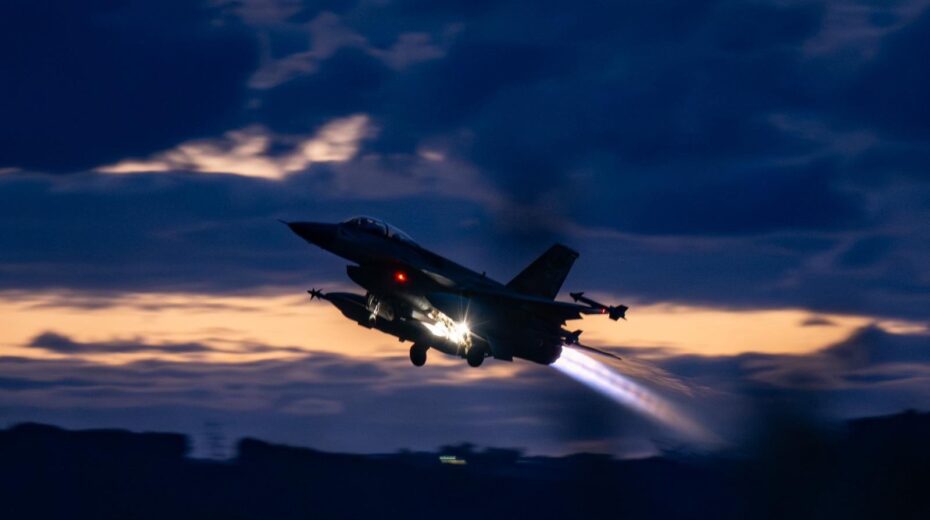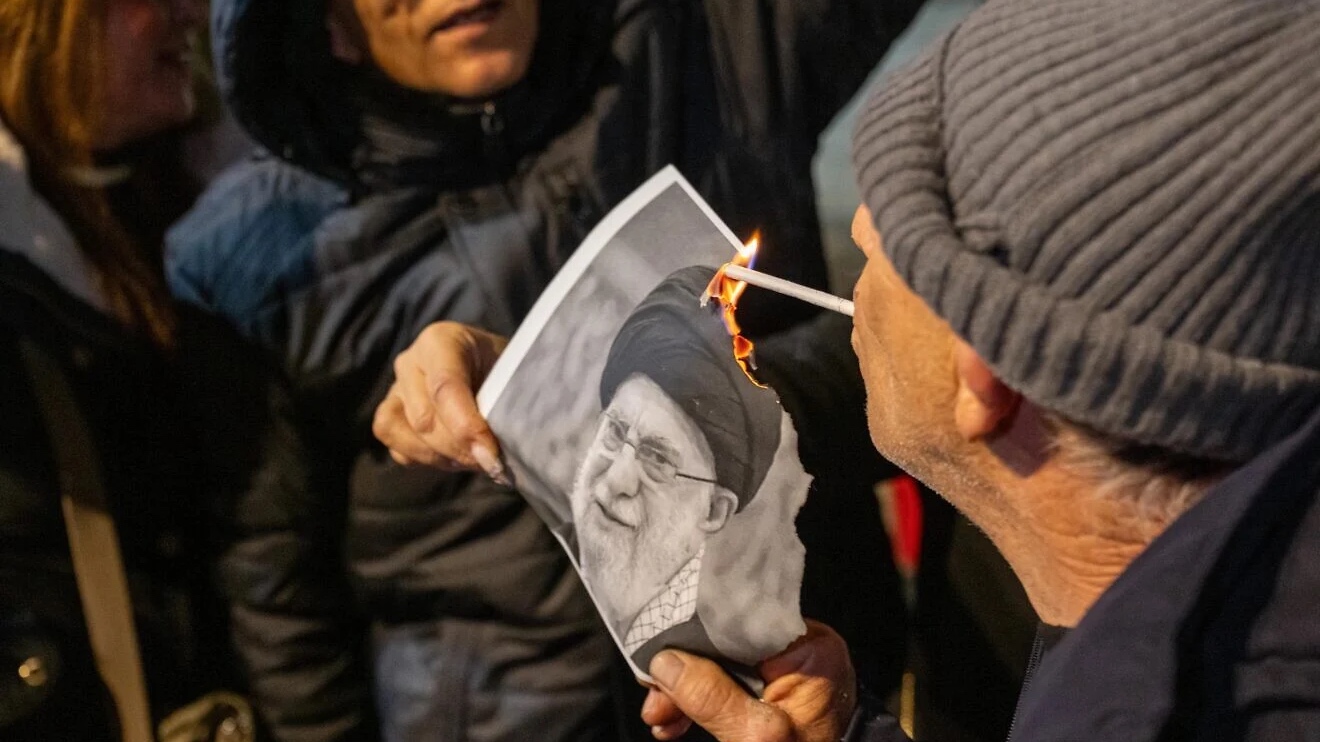
(JNS) US President Donald Trump is reportedly considering military action on Wednesday to support the Iranian protest movement, the largest demonstrations against the Islamic Republic in decades, with foreign governments removing staff from their embassies in Tehran.
JNS spoke with Janatan Sayeh, a research analyst at the Foundation for Defense of Democracies, and Annika Ganzeveld, Middle East portfolio manager for the Critical Threats Project at the American Enterprise Institute, about what is happening in Iran, how the Islamic regime has responded and what the Trump administration might do to support the protesters.
“The scale is unprecedented,” Sayeh said. “The momentum is unprecedented. This is not like anything we’ve seen before.”
The number of protesters that the regime has killed in recent days is unclear. Iranian officials have told The New York Times and other outlets that some 3,000 Iranians have been killed, a figure that comports with the assessments of independent rights groups operating outside Iran, like the Oslo-based nonprofit Iran Human Rights.
The true figure may be as high as 20,000 killed, CBS reported on Wednesday, based on sources inside and outside Iran.
Ganzeveld told JNS that the ferocity of the reprisals reflects how seriously the Islamic Republic takes the protest movement.
“The regime perceives these protests as an existential threat, and it’s willing to use any tools it has at its disposal to get rid of this threat to its survival,” she said. “That means violence, killing scores of protesters, using brutality across the board.”
‘I think they’ll continue killing’
Across its “axis of resistance,” Iran has previously endorsed unlimited reprisals against civilians to prop up its proxies. The Assad regime in Syria, with Iranian backing, killed hundreds of thousands of civilians in its failed, decade-long attempt to hold onto power.
Sayeh and Ganzeveld agreed that the Islamic Republic is unlikely to have any limitations on its willingness to kill Iranians to preserve its own regime.
“As long as they think it will keep them in power, I think they’ll continue killing,” Sayeh said.
“The regime doesn’t appear to be setting any limit for itself, and it appears willing to use all means and all violence necessary to contain these protests in order to ensure that the regime survives,” Ganzeveld said.
The Iranian government has successfully quelled recent protest movements, like the 2022-23 “Woman, Life, Freedom” movement, using mass violence, arrests and subsequent executions.
Trump has promised the Iranian protesters that “help is on its way” and that the United States will “take very strong action” if the government begins hanging dissidents.
Based on his conversations with people in Iran, Sayeh said that support from the United States is both hoped for and necessary for the anti-government movement to succeed.
“If there were to be no international response, whether Israel or America, which are the only two possible options, then it would realistically die out,” Sayeh said of the protests. “It would be crushed, and in that scenario, the situation would be much more dire than we’ve ever seen.”
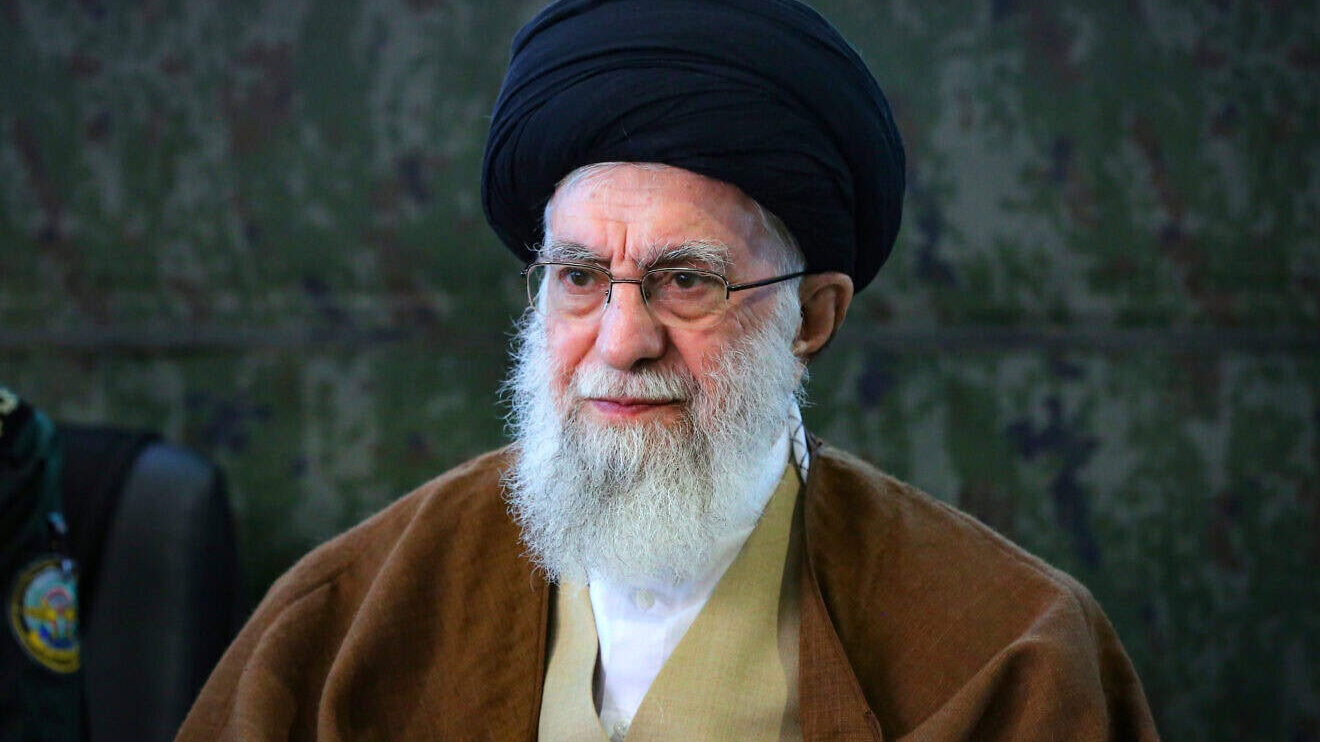
Trump has reportedly been briefed on a range of options to support the protests. That support could come in the form of military strikes on key Iranian officials, including Iran’s supreme leader, Ayatollah Ali Khamenei, or on Iran’s command-and-control apparatus.
‘There was a sense of unity’
Information about the protests has been fed to the outside world amid a regime-imposed internet blackout, thanks in large part to the Starlink satellite broadband network. The United States could also support Iranians’ access to Starlink in a non-military response.
One form of external support for the protests has also come from Reza Pahlavi, the son of the former shah of Iran, deposed in the 1979 Islamic Revolution, who lives in exile in the United States.
Pahlavi has long been a divisive figure inside Iran and among Iranian dissidents in exile, given the repressive nature of his father’s government, but videos from within Iran after he called for further protests last Thursday seem to indicate that he has a significant amount of support.
“Up until Thursday, the chants were all about, ‘Death to the dictator!’ or ‘This is the final year of Khamenei,’ and things of that nature,” Sayeh told JNS. “Once we saw that call, the numbers that were occupying Tehran were visibly greater. But more importantly, there was a sense of unity, meaning the chants of ‘Long live the king,’ or ‘This is the final battle, Pahlavi will return’—you heard it everywhere.”
“You heard it in cities that I had to double-check the pronunciation of, and I’m from the country. This is how widespread it was,” Sayeh said. “It was the only moment in the Islamic Republic’s history that one leader, one opposition, was able to bring people out.”
Pahlavi has since called for the Iranian army to defect from the regime’s wider security apparatus, which also includes more ideological elements like the Islamic Revolutionary Guard Corps, the Basij militia and foreign groups committed to the Islamic revolution that have deployed within Iran, including Iraqi popular mobilization forces and Lebanese Hezbollah.
“You are the national military of Iran, not the military of the Islamic Republic,” Pahlavi wrote on Tuesday. “You have a duty to protect the lives of your compatriots. You do not have much time. Join them as soon as possible.”
‘All the parallel institutions’
So far, no such defections have occurred, and Iranian officials who previously acknowledged the legitimate demands of protesters have fallen in line with the hardline stance that all demonstrations are the work of rioters and terrorists.
“Right now, if you’re an IRGC member, Basij member, opening fire on people, you don’t fear for your life, but the protester does,” Sayeh told JNS. “The game changer is, if that armed personnel who’s on the ground, if he fears for his life as much as the protester does, that’s when we would see defections happening.”
“I think you would start seeing defections after leadership decapitation for the mid-level officials to then assess whether there is a future for this regime or whether they want to defect,” he added.
Ganzeveld told JNS that any such defections would begin to whittle away at the legitimacy and stability of the regime.
“If you start seeing discontent among Iranian security forces, defections from Iranian security forces, defections from the regime, from political officials, that would crumble the foundation of the regime,” Ganzeveld said. “We haven’t seen any of those kinds of divisions yet.”
She added that one of the protest chants that has been observed refers to the regime’s uniformed police.
“It shows protesters trying to get the support from the law-enforcement command, from these police officers, and to bring them onto their side to create divisions within the regime in its response to the protests,” Ganzeveld said.
Though the contexts of the two countries are different, the recent US raid to capture Venezuelan dictator Nicolás Maduro shows one kind of response that the United States could take towards Iran, with a high-level kill-or-capture strike against leadership, followed by negotiations with the still-intact remnants of the regime.
Sayeh thinks that the model couldn’t work with Iran, where the protest movement no longer believes that the government holds legitimacy and the regime is unwilling to compromise on its support for terrorism and its nuclear and ballistic missile programs.
“Those are the three main things that are getting them sanctioned,” Sayeh said. “They’re not going to do that. An Islamic Republic that doesn’t believe in those three ideals is no longer an Islamic Republic.”
“The idea that you’re going to get a little bit of an Islamic Republic doesn’t make sense,” Sayeh said. “The thing about Khamenei is that even if you get rid of him, you have the IRGC, you have the Ministry of Intelligence, you have the military—there are all the parallel institutions that form the regime as a whole.”
“The idea that if you remove one person, somehow something’s going to be different is not plausible,” he said.
Ganzeveld said if the protest movement fails, there is likewise no reason to think that the Islamic Republic will change course or institute the kinds of reforms that would alleviate the economic and environmental conditions that prompted the protests in the first place.
“If these protests die out, the regime will likely further securitize society, further crack down on Iranians’ rights, and it will continue to do what it’s been doing, which is trying to build up its ballistic missile program, support the axis of resistance, but not actually making fundamental political or economic reforms that are needed to remove the underlying grievances that protesters have,” she said.
Want more news from Israel?
Click Here to sign up for our FREE daily email updates