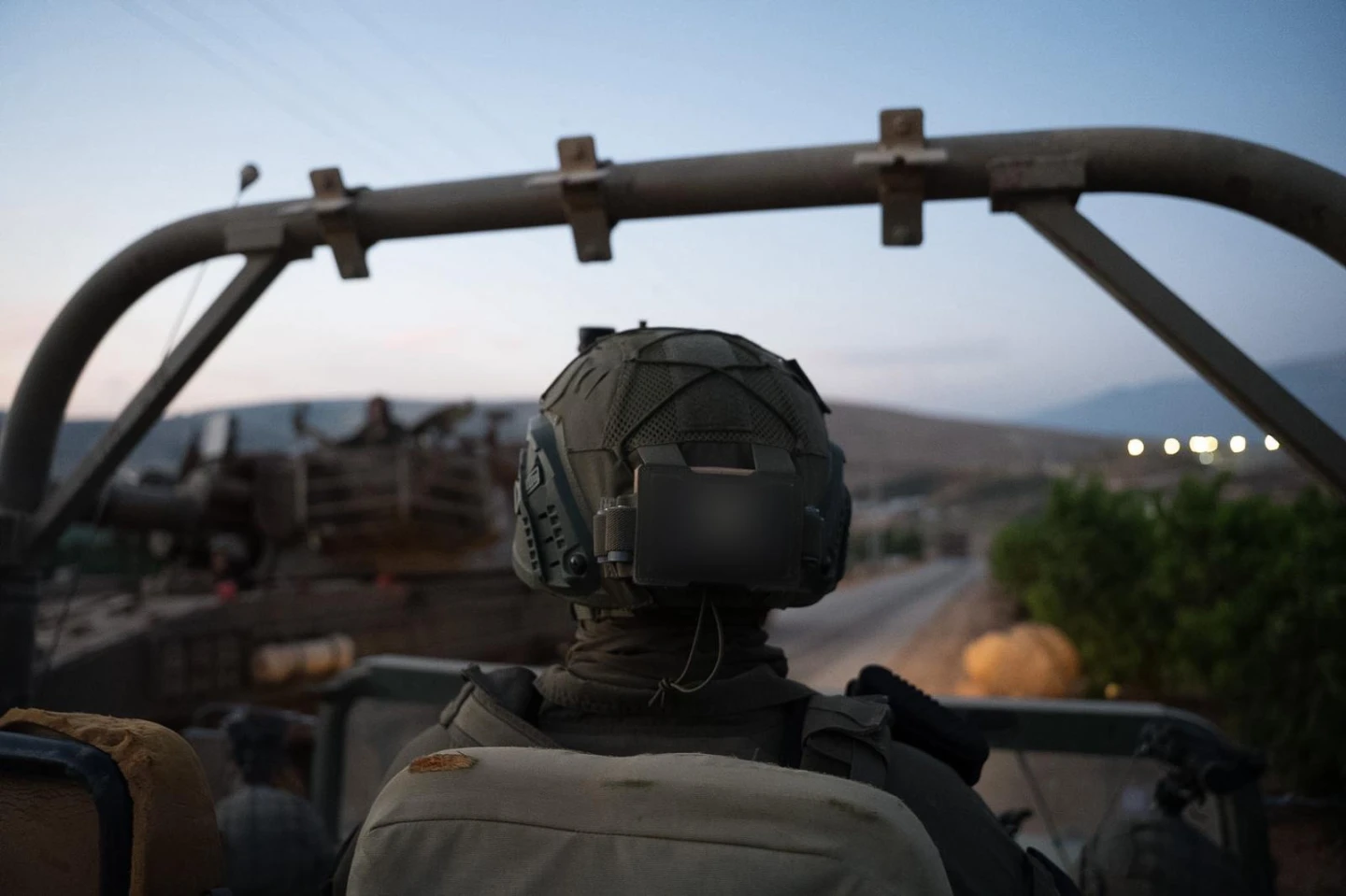
(JNS) For a 22-year-old native of Los Angeles, the journey from a yeshivah high school in California to the front lines against Hezbollah in Southern Lebanon as a combat commander in the Israel Defense Forces represents an extraordinary journey.
It involved rigorous training, a deep commitment to faith and an overwhelming sense of duty to the security of the State of Israel.
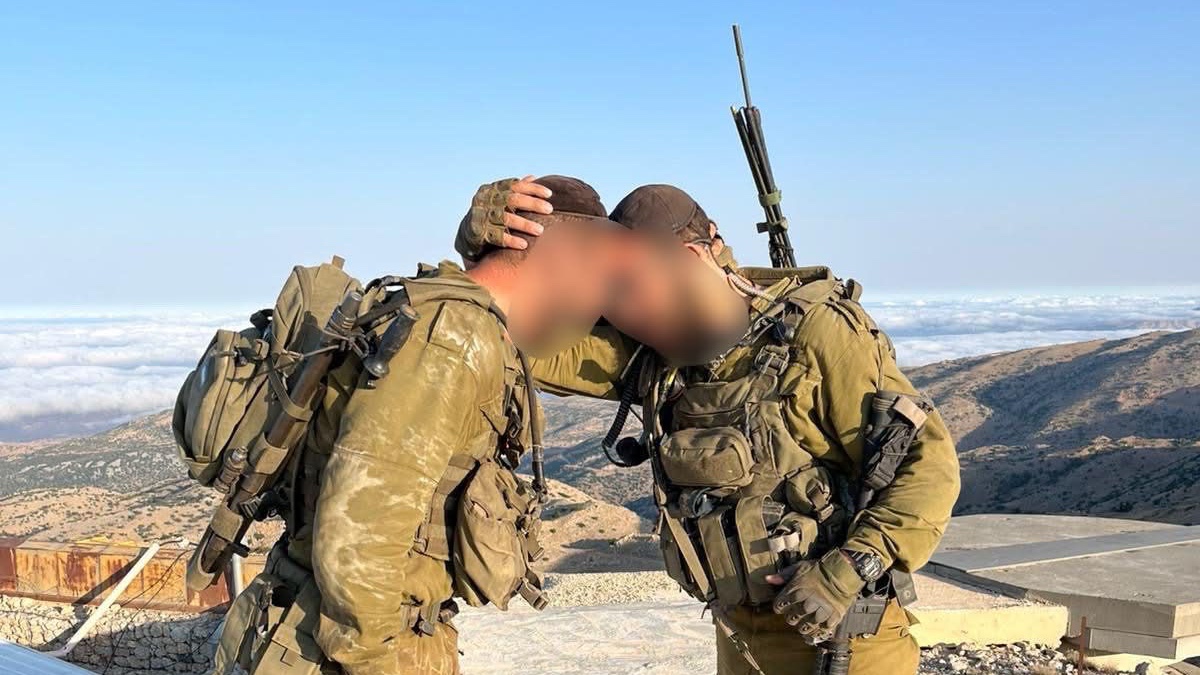
Staff Sgt. A. (full name withheld for security reasons) is a squad commander in the Yonatan Battalion of the recently established Hashmonaim Brigade, which is dedicated to enabling ultra-Orthodox soldiers to serve in the Israeli military.
“I come from the Pico-Robertson community. I was in a yeshivah high school over there in LA,” Staff Sgt. A. said, detailing the origins of his journey. “I decided with my parents that I really wanted to continue going to yeshivah—except I wanted to do this in Israel. I wanted to really see what this land is all about. And so I came at around 18 years old.”
Once in Israel, A. attended two yeshivah seminaries in Jerusalem before the Oct. 7, 2023, massacre changed everything.
“It really impacted my life. My brother was already in the IDF at that time,” he recalled. With his brother quickly deployed from Jenin to Gaza, A. felt he had to do something to “help out the most I can. So I drafted in November of 2023.”
His military service began in the IDF Armored Corps, where he served for more than a year.
During his time in the Armored Corps, the military was actively establishing the Hashmonaim Brigade, a unit specifically designed to accommodate the religious lifestyle of Haredi and deeply observant soldiers while enabling them to take full part in all combat operations.
Someone in the IDF had already spotted him as a potential recruit for the brigade, and A. received a call offering him a transfer.
“I was ecstatic. I heard rumors that they’re trying to open up a brigade, but I never thought they would call me,” he recounted.
The decision to transfer was immediate. Within a week, the move was confirmed.
“Within that week that they called me …, I think it was a Monday, if I remember correctly, and I did it by Wednesday. I didn’t wait. I wanted to get there as soon as possible. I thought it was the most interesting thing,” he said.
But he had one condition—to remain in a combat role.
“Because I think it’s a mitzvah to physically go out into the field, and to physically protect my friends, my family and my loved ones—my nation,” he emphasized.
His second basic training
Since the Hashmonaim Brigade is an infantry unit, the transition required him to restart his military training entirely. Following his second basic training, the brigade leadership selected him for advancement, and he began a commander’s course.
“So it means I was responsible for my squad, which is around six to seven guys. In the beginning, it was a little hard. It’s the first time you realize: These guys are entirely my responsibility.”
Taking responsibility for their safety and well-being was a transformative experience, he said. Then, after the second Iran war, when Hezbollah attacked Israel in March this year, A. was deployed to Southern Lebanon, where the realities of warfare came into sharp focus.
“Shabbat Zakhor [the Shabbat before Purim] happened …, and you know, we have to go into Lebanon. What you’re taught on a course where you’re sitting down in a classroom and what you see in the field—they’re two very different things,” he explained. “In the beginning, it was a little frustrating, because what I would have in my mind and what would happen in reality would be two different things. But everything worked out perfectly. I finished my first job as a squad commander.”
During this service, Staff Sgt. A. took part in clearing and demolishing homes rigged with weapons and explosives in Southern Lebanon. His squad encountered massive stockpiles of advanced Hezbollah weaponry concealed from aerial surveillance.
“You hear it on the news all the time or you hear it from other people—you hear everyone in Gaza has weapons. But once you’re physically there [in enemy territory], you see it. I’m not saying every house, but when you are physically there, you see it.
“We opened up a house and saw an artillery rocket launcher covered with blankets so thermals couldn’t pick it up, and we took off the blankets. We saw it was full of rockets pointed toward Nahariya. It’s very different seeing it in real life than hearing about it in the news. And it was very scary, but it was also a big step up.”
To neutralize these threats, the military uses specialized infantry demolition teams that enter incriminated homes after receiving intelligence. The area is first cleared by combat teams before the demolition can begin.
Having successfully completed his tenure as a squad commander, he transitioned to becoming a staff sergeant of that same team.
“I’m the last guy to go in. I make sure no one’s behind me. It’s a lot harder,” he said.
Addressing the core mission of the Hashmonaim Brigade, Staff Sgt. A. firmly dismissed any notion that religious observance hinders operational effectiveness.
“I will say this: Us being religious doesn’t stop us from being able to do the same amount of missions or affect the quality of missions compared to the regular army. The fact that we pray three times a day, or have stronger kashrut in the brigade or have a mandatory hour of learning a day doesn’t change our professionalism and the missions that we do,” he said.
The integration of faith and combat was profoundly evident during their initial maneuvers into enemy territory, where spiritual readiness was not neglected.
“When we went in for our first maneuver, you open up a house and then you stay in that house. My operations commander said: We have to make sure we have a ‘Pakal Kodesh’ [Hebrew for ‘standing order for sanctity’].
“Meaning before we go in, even before checking magazines or checking water, he wants to make sure that everyone has a sacred book they can read whenever we have enough downtime. That was so important to him,” Staff Sgt. A. recalled.
The soldiers embraced the directive. “It was so important to everyone. Everyone brought one. We carried it in our backpacks. Everyone did it with so much happiness, [even though] it was carrying more weight.”
Even under the most exhausting combat conditions, the unit maintained its religious studies.
“When we came back from missions during the day, we would be dead tired and hungry and sweating. The officer just called everyone and we learned together, 10 to 15 minutes, had just a beautiful chavruta [studying in pairs or small groups],” he concluded.
“For those 10 to 15 minutes, everyone was present and everyone was learning together. It didn’t matter what was going on outside.”
Want more news from Israel?
Click Here to sign up for our FREE daily email updates