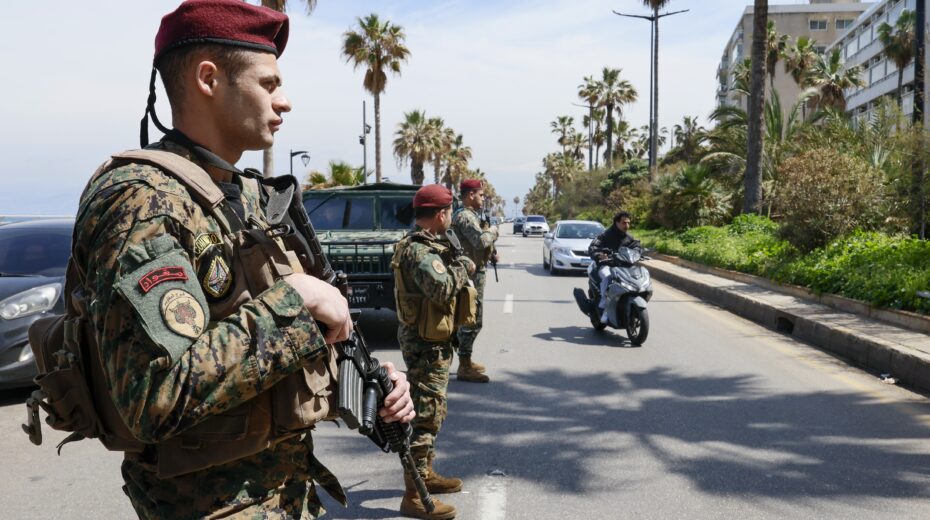

To understand where its loyalty lies, it is helpful to look at the army through three different lenses:
1. How does the LAF maintain unity in a deeply divided society?
First, the LAF is widely regarded as the only truly cross-sectarian institution in Lebanon. In a country deeply divided by religion and politics, the army is one of the few entities that enjoys broad trust across Sunni, Shi’a, Christian and Druze communities.
Its primary institutional loyalty is to preserving civil peace. Historically, the army has often chosen neutrality during internal conflicts, such as in 2008 or the 2019 protests, to prevent its own collapse. If the army were to take a side in a sectarian fight, it would likely fracture along religious lines, as happened during the Lebanese Civil War in 1975.
Because the army has this unifying image, its chiefs have been elected as presidents since 1998. This trend embodies the army’s value as a rallying point for all sectarian communities.
Gen. Rodolphe Haykal, the current army chief, is aware of this and considers himself a possible successor to President Joseph Aoun when his term ends. There are persistent Lebanese media reports about his special ties with Hezbollah’s leaders and alleged deals with the Shi’ite militia to secure their support for future presidential elections. Such a deal involved claims of eradicating Hezbollah’s positions in South Lebanon.
Haykal reported to the government that the area was clear of Hezbollah’s armed presence, but he gave false information to both the Lebanese government and US officials. Haykal’s double-talk was most evident during a tense meeting in Washington with Sen. Lindsey Graham. Graham asked if he considered Hezbollah a terrorist organization. Haykal replied, “No, not in the context of Lebanon.”
If this is the LAF chief’s view, what can the US and Israel expect from the Lebanese Army when it comes to implementing any agreement between Israel and Lebanon?
2. To what extent is the LAF influenced by Hezbollah?
Second, the most controversial aspect of the LAF’s loyalty involves its relationship with Hezbollah.
Nearly 60% of the LAF’s rank and file are Shi’ites, and major positions in the army are held by Shi’ite officers, such as Gen. Mounir Shehadeh, the coordinator with UNIFIL, and Gen. Souheil Harb, head of military intelligence. Both reportedly serve as debriefers to Hezbollah on major developments involving Israeli-Lebanese relations and the US and other foreign powers’ interventions in Lebanese politics.
For years, the LAF has operated under a “no-confrontation” policy with Hezbollah. This is partly due to political directives from the Lebanese government and partly because a direct clash could trigger a civil war. Proponents of the “Army-People-Resistance” doctrine argue that the LAF and Hezbollah complement each other, as the army provides domestic legitimacy, while Hezbollah provides asymmetric “deterrence” against external threats.
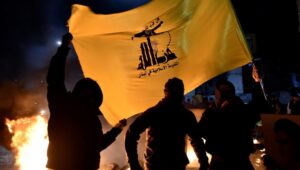
As of early 2026, the LAF is under immense pressure, from both a new Lebanese leadership and international brokers, to implement disarmament plans north of the Litani River. Critics argue that until the LAF has a monopoly on the use of force, its “national” loyalty remains compromised by Hezbollah’s Iranian-backed influence.
3. How does foreign aid shape the LAF’s strategic decisions?
Third, the LAF is almost entirely dependent on foreign assistance for survival, especially since the 2019 economic collapse. The US is the LAF’s largest donor, providing billions in equipment and training. The American goal is to create a counterweight to Hezbollah.
France and Qatar have also provided critical support, such as salary subsidies and food for soldiers. This dependence fuels accusations that the LAF’s strategic decisions are influenced by Western “diktats.” However, the military leadership argues that this support is essential for national survival. Without foreign support, the army would cease to exist, leaving a vacuum for more radical groups.
Finally, the Lebanese army is essentially loyal to the idea of a unified Lebanon. Yet, it is constrained by a weak state and a heavily armed non-state actor, Hezbollah. In 2026, the LAF is trying to shift from a “coexistence” model with militias to a “sole-protector” model.
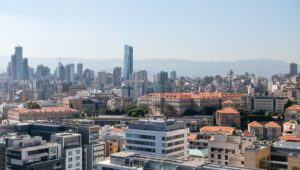
However, its success depends on whether Lebanon’s political system gives it enough mandate and resources. In mid-April, the army got orders to secure the Beirut Governorate and demilitarize it after news of an aborted coup led by Hezbollah.
As a result, the army deployed around key government institutions in Beirut. It is still unclear whether the army will be ready to confront Hezbollah’s organized protests. Given the LAF’s ambiguous stance toward Hezbollah, there are questions about whether the army chief would deploy troops to defend a political agreement reached between Israel and Lebanon, since Hezbollah totally opposes such an agreement.
Based on the LAF’s past conduct, it is unlikely that Haykal’s army would offer such support.
Originally published by the Jerusalem Center for Security and Foreign Affairs.