(JNS) “It was unbearable to watch someone you love being beaten and be unable to say a word. You don’t know if they’re going to kill her,” former hostage in Gaza Aviva Siegel told JNS on Thursday.
Siegel was referring to Hamas terrorists’ beating of Amit Soussana, who was held alongside her for part of her captivity. She recounts the incident in her new book, Survived to Tell: A Hostage’s True Story of October 7 and 51 Days in Captivity.
“It was terrible, I’m a human being with a heart and was not able to do anything, as if they expected me to vanish. It’s impossible not to feel,” Siegel told JNS.
“Captivity was too hard to handle, and every moment you didn’t know if it was going to get even worse,” she said.
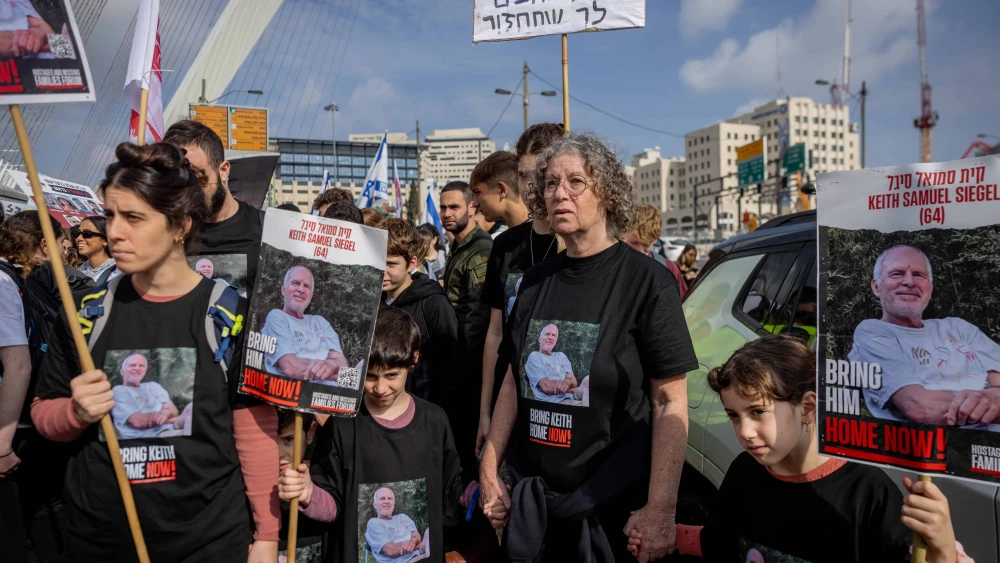
Released Israeli hostage Aviva Siegel (center) marches to Jerusalem from Tel Aviv, calling for the release of Israelis being held captive by Hamas in the Gaza Strip. Dec. 28, 2023. Photo by Chaim Goldberg/Flash90.
Siegel, 65, was born in South Africa and moved to Israel at a young age. She and her husband, Keith, 67, a dual US-Israeli citizen, were abducted from Kibbutz Kfar Aza during the Oct. 7, 2023, massacre.
She was released on Nov. 26, 2023, under a temporary ceasefire agreement. Her husband was freed after 484 days in captivity.
Siegel said the hardest memories were of Oct. 7 itself, when more than 1,200 people were killed in the cross-border invasion.
“To be in a situation where in a second Hamas terrorists open the door and stand with knives, shouting at us, it’s a difficult moment,” she said.
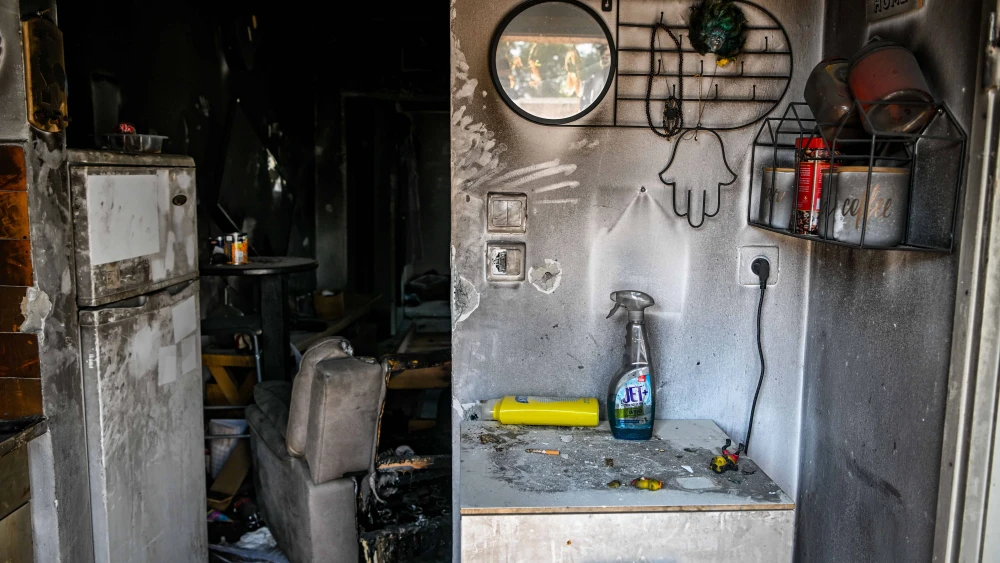
A view of the destruction caused by Hamas terrorists on Oct. 7, 2023, in Kibbutz Kfar Aza, near the Gaza border, Nov. 2, 2023. Photo by Arie Leib Abrams/Flash90.
Siegel spoke of flashbacks to when Chen Goldstein arrived in the Hamas tunnels with her daughter Agam and sons Tal and Gal, just minutes after Siegel and her husband were taken there on Oct. 7.
“Their faces come back to me all the time. I remember when they told us that the children’s father, Nadav, had been murdered while trying to protect them in front of their eyes, along with their sister, Yam,” Siegel said.
She also recalled the arrival of hostage Gali Berman, who was kidnapped from Kfar Aza and released in October 2025 alongside his twin brother, Ziv. Berman entered the underground tunnel covered in blood.
“I remember his smell and his appearance. He was touching his head and asked me to look at the back of it, asking me if it was still bleeding. I had to lie to him and tell him it was OK. I kept telling myself I had to help him relax, but his wound looked terrible. I could see the inside of his head,” she said.
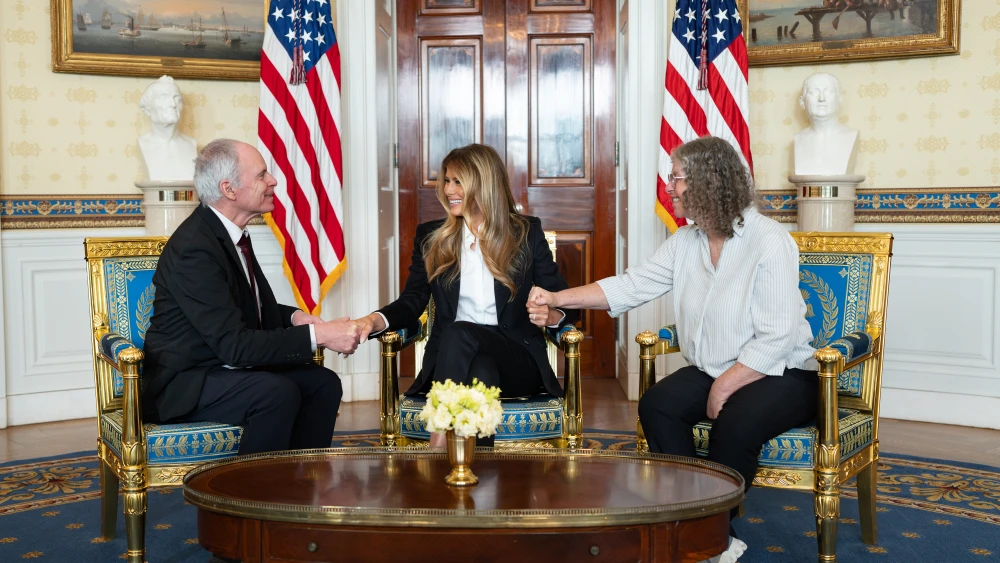
US first lady Melania Trump meets with freed hostages Keith Siegel and Aviva Siegel at the White House, Feb. 4, 2026. Credit: Andrea Hanks/White House.
Siegel was held with her husband throughout her captivity and spent part of that time alongside the Goldstein family, Amit Soussana, Gali Berman, Liri Albag and Agam Berger.
Siegel suffered from severe diarrhea at times but was afraid to ask her captors to use the bathroom.
“I was scared all the time, shaking. I was petrified, from beginning to end. I didn’t sleep. Maybe five minutes here, 10 minutes there at most,” she said.
“I was in a terrible state, really, really bad. I’ll never forget when Agam [Goldstein], who had been afraid for the first couple of weeks, stopped being afraid. Then I was the only one who was still fearful. Keith told me to keep telling myself that I wasn’t going to die, but it didn’t really help,” she added.
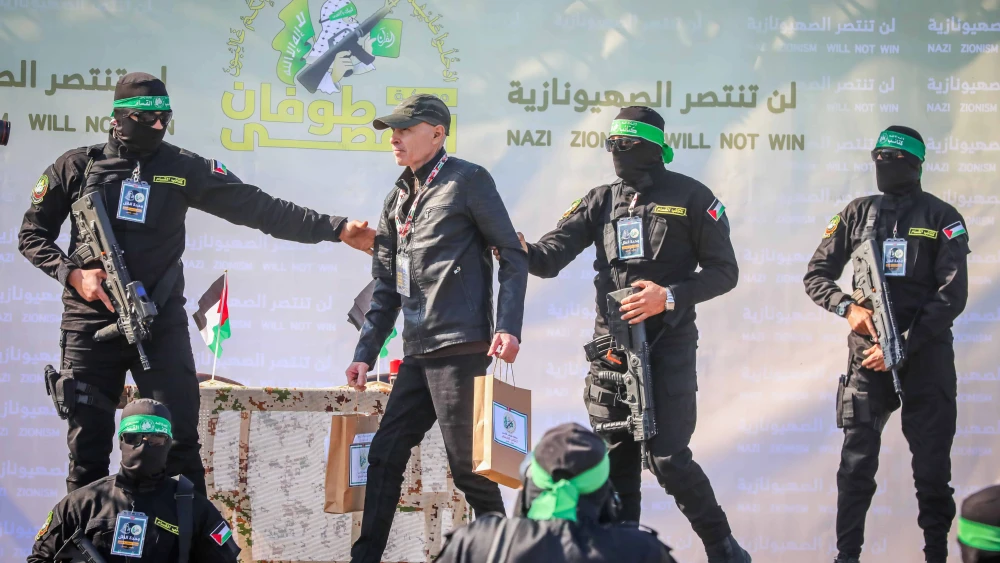
Terrorists from Hamas’s “Shadow Unit” hand over Israeli hostage Keith Siegel to the Red Cross during a propaganda ceremony in Gaza City, Feb. 1, 2025. Photo by Ali Hassan/Flash90.
Siegel recounted being in a tunnel with her husband and Soussana, where they were left alone with almost no food or light and barely enough oxygen. Their captor, Jihad, rarely checked on them.
“He saw us dying. He left us there, knowing that by the time he returned, we would likely be dead. How can you do that? I don’t understand what kind of people they are or what they are made of. When someone is suffering, even if you don’t know them, you feel for them,” she said.
Siegel said her separation from her husband before her release happened very quickly.
“I begged them to let me see Keith after they put him in a separate room. I just wanted to give him a hug and tell him that I was right next door, but they wouldn’t let me,” she said.
Siegel recalled that one of the terrorists told her, “You, tomorrow [in] Israel,” but she said she did not believe him.
“I didn’t know what would happen to me or whether they would kill me, rape me, beat me or do whatever else they wanted,” she said.
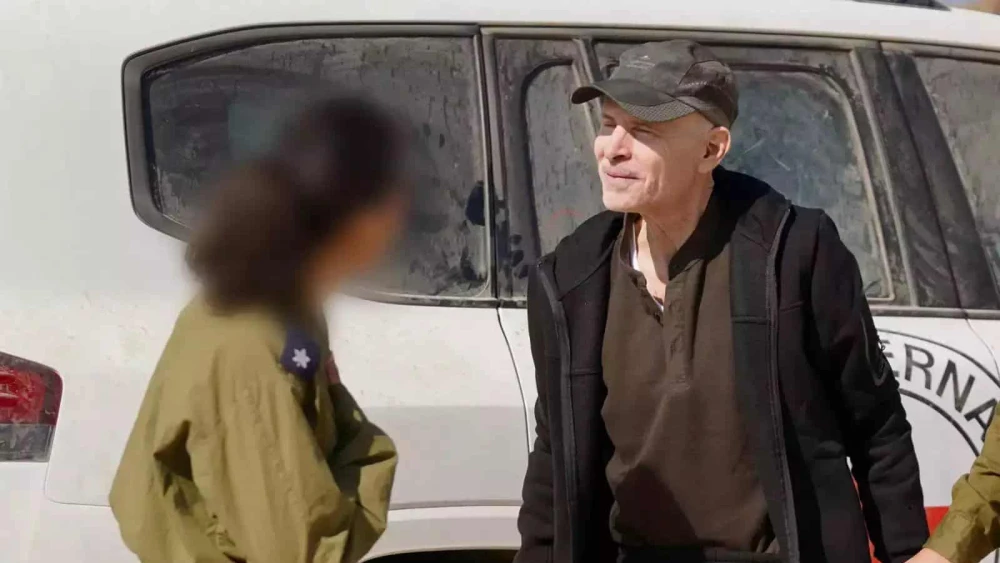
Keith Siegel meets an IDF major after being released from Gaza on Feb. 1, 2025. Credit: IDF Spokesperson’s Unit.
In an act of defiance, Siegel pushed past her captor and hurried to another room in the same house, where she found her husband lying on a thin, filthy mattress on the floor, staring at the ceiling.
“He looked sad because he was alone. I bent down and hugged him. I said, ‘You be strong for me, and I’ll be strong for you.’ It was the only thing I could think of, and then I left.”
Recalling her release, Siegel spoke about Avigail Idan, who was 3 years old when she was kidnapped on Oct. 7, after her parents were murdered.
“In the Red Cross car, as we were leaving Gaza, I looked at Avigail. I could see she was crying, but nobody could hear her. She had learned how to cry without making a sound,” Siegel said.
“I took her in my arms, hugged her and looked her in the eyes. I asked if she could feel my hug, and she simply nodded. Then I gave her some water, and asked if she wanted something to eat. She was starving, so she said yes and took a couple of bites,” Siegel continued.
“I think about her coming home and having to live without her parents. She’ll have her whole life to remember what happened. All these young children are going to carry these memories with them.”
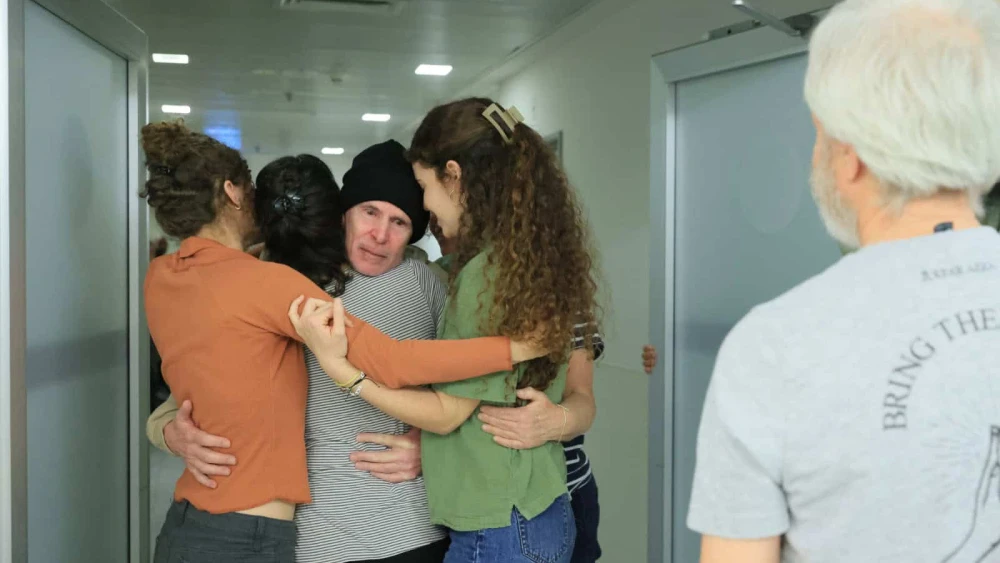
Freed American-Israeli hostage Keith Siegel, accompanied by his wife, Aviva, reunites with his daughters Elan, Gal and Shir, and his brother Lee, at Sourasky Medical Center (Ichilov Hospital) in Tel Aviv on Feb. 1, 2025. Photo by Ronen Harish/GPO.
Siegel said Keith’s return was the happiest moment of her life, describing the overwhelming joy of finally being able to sit beside him again.
“But something was taken away from both of us. We couldn’t really pick ourselves up at the time, and only recently have I started to feel different,” she said.
The 64 people murdered in Kfar Aza included some of her closest friends and neighbors, many of whom she had known for 40 years. Their homes now stand empty, with no one left to return to them.
Despite the trauma, Siegel said she stays in touch with fellow former hostages.
“It’s something that we’ll always have, that special connection with everybody. It’s a different relationship that I have with anybody else in the world,” she said.
“We have images that come and go, memories and difficult times when we think about or talk about our experience. But I’m lucky to have Keith with me. We’re lucky to be alive, and I’m grateful,” she added.