
Recently, both Israel and the United States confirmed that the PLO-PA continued making terror-reward payments to imprisoned terrorists and the families of “martyrs” in 2025.
These confirmations are significant for several reasons.
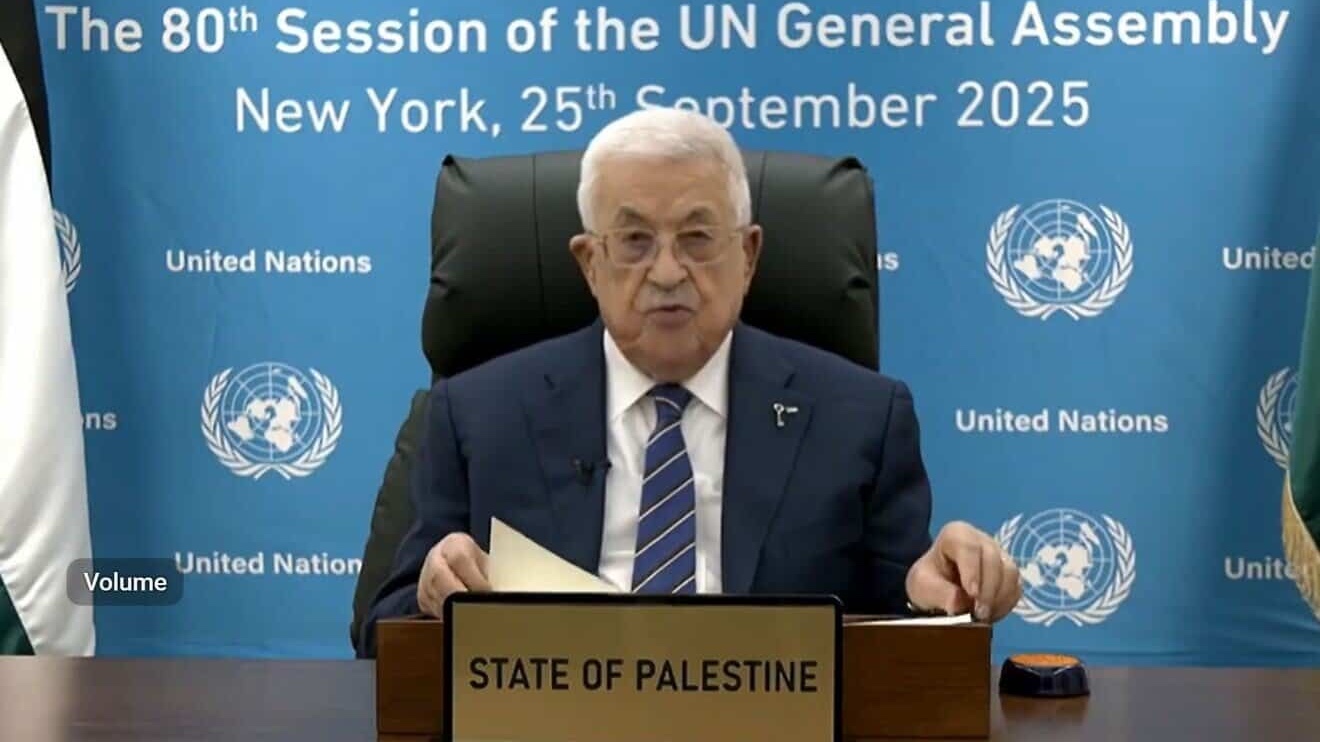
First, they expose what critics say were deceptive efforts by PA head Mahmoud Abbas to mislead the international community. In February 2025, Abbas claimed, under new PA legislation, that the payments had been terminated.
Equally important, the confirmations raise a fundamental question: Where did the PLO-PA obtain the funds to continue making these payments?
According to PA financial reports, between 65% and 70% of the PA’s operating budget came from tax revenues that Israel agreed to collect and transfer under the Oslo Accords. Since the Hamas massacre in southern Israel on Oct. 7, 2023, however, those transfers have been substantially reduced.
Israel began deducting funds in 2019 under the “Freeze Law.” Following the Oct. 7 attacks, the Israeli Security Cabinet approved additional deductions equivalent to the funds the PA transferred to Gaza. Since June 2025, Israel has suspended transfers of the remaining funds altogether.
With most of its primary source of revenue cut off, the question remains: How did the PLO-PA continue financing terror payments?
History repeats itself
The answer, critics argue, is simple—though difficult for many of the PA’s international donors, particularly the European Union, to acknowledge.
The PA was created through a series of agreements collectively known as the Oslo Accords. Beginning with the Declaration of Principles in September 1993, the agreements expanded through subsequent accords, including the Protocol on Economic Relations in April 1994, the Gaza-Jericho Agreement in May 1994 and the Interim Agreement on the West Bank and Gaza Strip in September 1995.
As Israel transferred authority over designated territories, another pattern emerged.
Despite making formal commitments, the PLO frequently acted as though it was not bound by them.
A November 1995 report by the US General Accounting Office to Congress highlighted concerns that would later become recurring issues. The report examined the PLO’s ability to finance the newly established PA and identified several anomalies, including rapid bureaucratic growth and apparent violations of agreed limitations.
Among other questions, the report asked why the PA required 9,000 civil servants to replace approximately 1,600 employees of Israel’s Civil Administration.
More troubling, the report noted that the PA police force, officially capped at 9,000 personnel, had already expanded to more than 18,000 members.
Using international donations to fund terror payments
The report also examined international funding mechanisms established to support the PA. The largest of these was the World Bank-administered Holst Fund, which served as a central repository for donor contributions.
According to the report, the PA violated its grant agreement with the World Bank by diverting $2 million from the Holst Fund to finance payments to the families of deceased terrorists. As noted above, such “martyr payments” are a central component of the PLO-PA’s pay-for-slay policy.
The use of international donor funds to finance these payments, including through World Bank-administered mechanisms, has been documented on multiple occasions.
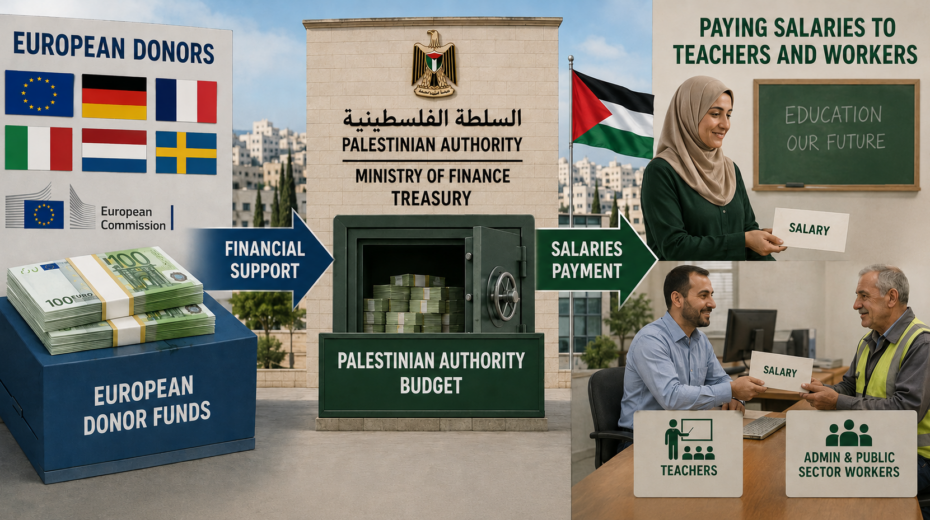
‘The EU only pays teachers’
In theory, the European Union limits most direct assistance to the PA to essential public services, including salaries for teachers, civil servants and healthcare workers. By restricting aid to ostensibly legitimate government functions, the EU seeks to distance itself from any association with pay-for-slay payments.
Critics argue, however, that money is fungible. By covering the salaries of PA employees, donor funds free up other resources that can be redirected toward terror payments.
They further note that many of the teachers whose salaries are supported by international aid teach from a PA curriculum that the EU itself has criticized for containing antisemitic content. Thus, they argue, while donors may avoid directly financing pay-for-slay, they are nevertheless funding institutions that promote hostility toward Israel and Israelis.
Whatever the mechanism, critics contend that the record is clear: Since the signing of the Oslo Accords in 1993, the PLO-PA has used—and continues to use, both directly and indirectly—international donor funds to sustain its pay-for-slay policy.
Originally published by the Jerusalem Center for Security and Foreign Affairs.